
Massage Therapy vs Osteopathy: Which One is Right for Your Pain?
You’ve been dealing with that nagging lower back ache, a stiff neck that won’t quit, or tension headaches that show up every Monday morning. You know you need help – but when you start researching your options, you find yourself choosing between a Massage Therapist and an Osteopath, unsure what the difference even is.
Both can help with pain. Both involve hands-on treatment. And yet they are fundamentally different in approach, scope, and training. Here’s how to figure out which one is right for you.
Not sure where to start? Book a free consultation at CORE Ceutical Clinic and we’ll help you find the right treatment for your pain.
What is Massage Therapy?
Massage Therapy focuses on the body’s soft tissues – muscles, tendons, connective tissue, and fascia. A Registered Massage Therapist (RMT) uses a range of techniques, from deep tissue pressure to gentle Swedish strokes, to release muscle tension, improve circulation, and reduce pain.
What Massage Therapy is especially good for:
- Muscle tightness and soreness from physical activity or repetitive strain
- Stress-related tension (neck, shoulders, jaw)
- Post-workout recovery
- General relaxation and nervous system downregulation
- Headaches with a muscular or postural origin
- Temporary injury support alongside physiotherapy or chiropractic care
Massage Therapists are highly skilled at reading and responding to soft tissue. A good RMT can detect areas of chronic holding, adhesion, and guarding that you might not even be aware of – and systematically work through them over a series of sessions.
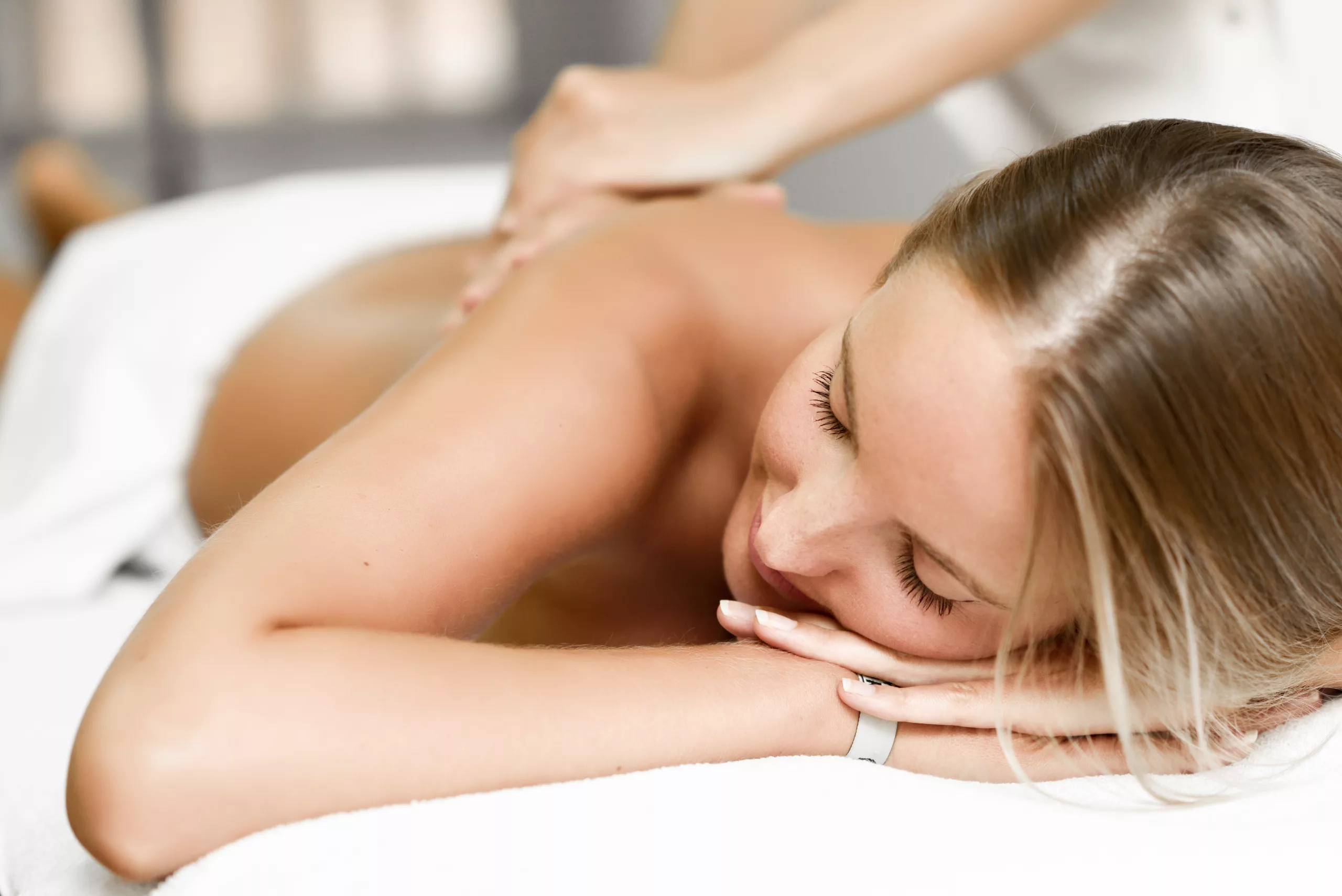
Ready to release that tension? Book a Massage Therapy session in Newmarket and feel the difference after your first visit.
What is Osteopathy?
Osteopathy is a regulated healthcare profession that views the body as an integrated whole – meaning that pain or dysfunction in one area can have roots in another.
Osteopaths are trained to assess and treat the musculoskeletal system, but their focus extends beyond muscles to include joints, the spine, the nervous system, and even the way organs move within the body (visceral osteopathy).
Osteopathic treatment may include joint mobilization, soft tissue techniques, craniosacral therapy, and fascial release.
Sessions typically begin with a thorough assessment – including your health history, posture, gait, and movement patterns – before any hands-on treatment begins.
What Osteopathy is especially good for:
- Persistent or recurring pain that hasn’t responded to massage alone
- Joint restrictions and mobility issues
- Pain with a structural or postural cause (e.g., scoliosis, pelvic imbalance)
- Pain that seems to move around or doesn’t have an obvious origin
- Recovery from injury with a complex presentation
- Headaches, dizziness, or jaw pain with a spinal component
- Digestive or pelvic issues with a suspected musculoskeletal link
Because Osteopaths take a whole-body view, they often identify connections that other practitioners miss – like foot mechanics contributing to hip pain, or neck tension originating from the thoracic spine.
Tired of pain that keeps coming back? Explore Osteopathy at CORE — and get to the root of it.
Key Differences at a Glance
So — Which One Should You Choose?
Start with Massage Therapy if:
Your pain is clearly muscular. If you’re sore from the gym, carrying tension in your shoulders from desk work, or just need to decompress after a stressful week, Massage Therapy is efficient, targeted, and deeply satisfying.
It’s also typically easier to access and book, and many extended health benefit plans cover it with no referral required.
Sessions typically begin with a thorough assessment – including your health history, posture, gait, and movement patterns – before any hands-on treatment begins.
Consider Osteopathy if:
Your pain keeps coming back despite regular Massage.
Or if you’ve tried multiple treatments without lasting relief.
Or if your pain is diffuse, travels to different areas, or seems to have no clear cause.
Osteopathy is particularly valuable when the problem is structural – when muscles are tight because a joint isn’t moving properly, or because your body has developed compensatory patterns around an old injury.
The honest answer? You may benefit from both.
Many people find that Osteopathy addresses the underlying structural issues – the root cause – while Massage Therapy supports the process by keeping muscles relaxed and helping the body adapt to structural changes. They’re not competing approaches; they’re complementary ones.
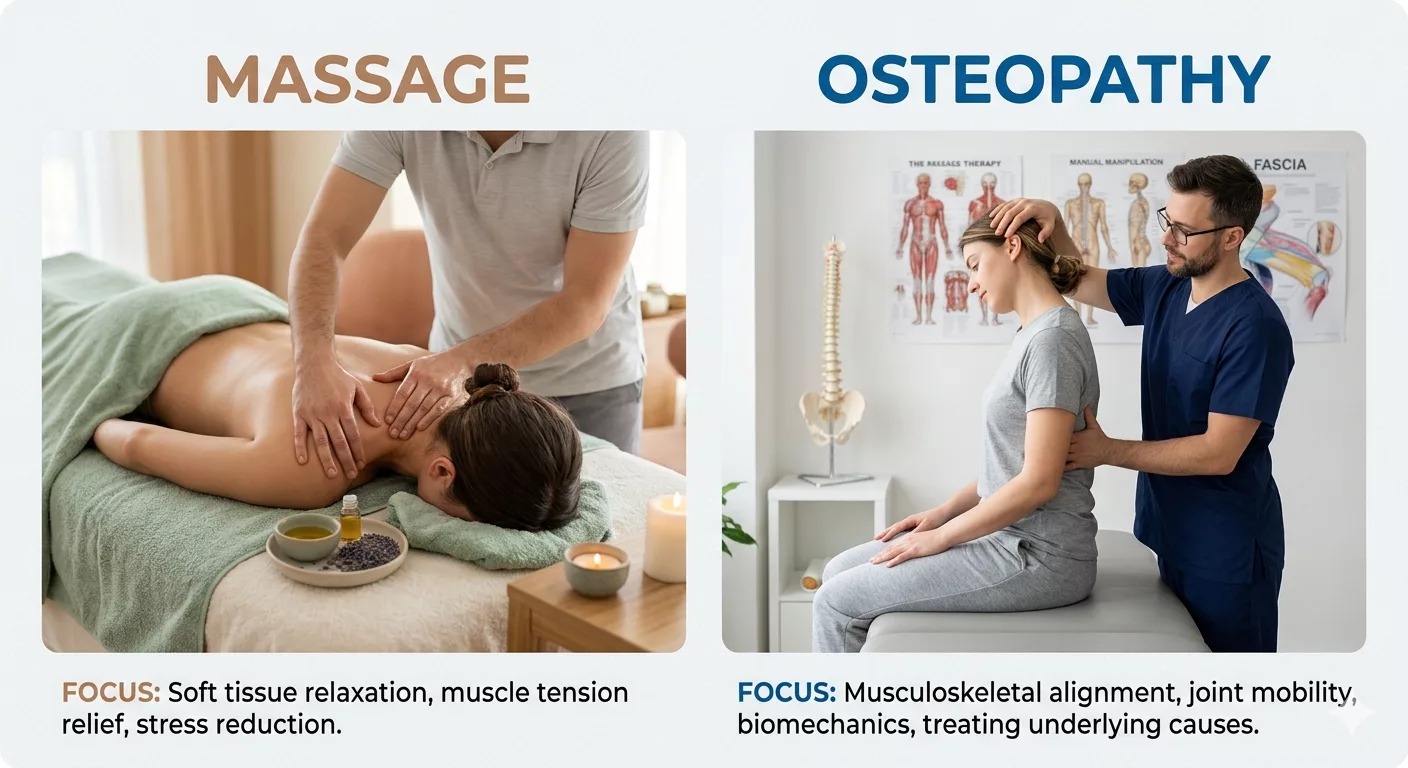
Still not sure which one is right for you? Meet Maria and her approach to care for a personalized recommendation — no commitment required.
The Bottom Line
If you're dealing with muscle tension and stress: start with Massage Therapy.
If your pain is persistent, structural, or complex: see an Osteopath.
If you want comprehensive, lasting results: consider working with both.
The best practitioner is the one who listens carefully, explains what they're finding, and adjusts their approach based on your response. Don't be afraid to ask questions - about their assessment, their treatment plan, and what you can do between sessions to support your recovery.
Your pain has a story. The right practitioner will help you understand it.
Transforming to Excellence
We Make Everything Look and Feel Better! 🩷🩵 Feel your best from the CORE.
About the author
Maria is the founder and lead practitioner at CORE Ceutical Clinic in Newmarket.
With over 13 years of Medical experience, she specializes in Advanced Skin Care, Laser treatments, and Therapeutic services – combining clinical expertise with a Holistic approach to Beauty and Health.

Curious about the other services we offer at CORE Ceutical Clinic? Explore our specialized categories:
CORE Beauty, CORE Health, and CORE Holistic — designed to support your Beauty, Health, and Wellness.
FAQ: Massage Therapy vs Osteopathy
Can I see a Massage Therapist and an Osteopath at the same time?
Yes – and many people do. They complement each other well.
Osteopathy tends to address the underlying structural cause of pain, while Massage Therapy helps manage muscle tension and supports the body’s adaptation between Osteopathic sessions.
Just let each practitioner know you’re working with the other so they can coordinate their approach.
Do I need a doctor's referral to see either practitioner?
In most cases, no. Both Massage Therapists and Osteopaths can be seen directly without a physician’s referral.
However, your extended health benefits plan may require a referral for reimbursement – it’s worth checking your policy before booking.
How many sessions will I need before I see results?
It depends on how long you’ve had the pain and what’s causing it.
Acute muscle tension from a tough week at the office may resolve in one or two Massage sessions. Chronic or structural issues treated with Osteopathy typically require a course of 4–6 sessions before lasting change takes hold.
Your practitioner should give you a realistic timeline after the initial assessment.
Is Osteopathy covered by insurance?
Coverage varies by province and plan. Many extended health benefit plans in Canada cover Osteopathy under “Manual Osteopathic Therapy” or a paramedical services category – but the annual limits and requirements differ. Massage Therapy is more universally covered.
Check your plan’s specific wording, and ask your practitioner if they can provide receipts in the format your insurer requires.
I've had pain for years. Is it too late for these treatments to help?
No. Chronic pain – even pain that’s been present for years – often responds well to hands-on treatment, especially when combined with movement and lifestyle changes. The body has a remarkable capacity to adapt.
That said, managing longstanding pain typically requires more sessions and a broader approach than acute injuries.
An honest practitioner will tell you what’s realistic for your situation.
How do I know if my pain is muscular or structural?
This is one of the trickiest questions in manual therapy, and the honest answer is: it’s often both.
Muscular tension frequently develops as a protective response to an underlying joint restriction or postural imbalance – so treating the muscle alone may only provide temporary relief.
If your pain keeps returning despite regular massage, that’s a strong signal to get a structural assessment from an Osteopath.